


For our clients and customers to keep up to date with current health and herbal medicine research and their conditions
Todays Headlines:
- “Large doses result in vivid, intense hallucinations, which can last for over a day.” 10 powerful, mind-altering, psychedelic plants –with some surprises Sunday August 30th, 2026
- Berries and nuts may reverse life-threatening damage caused by heart failure Sunday August 23rd, 2026
- The Clearest Evidence Yet That a Common Plastic Increases Risk of Fatty Liver Disease Saturday August 15th, 2026
Read More:
- “Large doses result in vivid, intense hallucinations, which can last for over a day.” 10 powerful, mind-altering, psychedelic plants –with some surprises Sunday August 30th, 2026Humans have long turned to the plant kingdom to alter their minds – for religious rituals, medicine, or recreation. Here are some of these plants. Mind-altering plants range across continents and taxonomic groups. The compounds that make them so appealing to humans are produced in order to deter predation – that is, they are essentially toxins. While unappealing or even deadly to insects and other herbivores, they can have more pleasant effects in humans. Substances that alter the human mental state are referred to as psychoactive – or sometimes as psychotropic. The effects on the nervous system vary depending on the plant: some depress or stimulate it. Others, known as psychedelics, create hallucinogenic states, leading to altered perceptions of reality. The physical and mental health benefits of ingesting these plants have been extensively debated. While some have proven effective in treating conditions ranging from physical pain to psychological trauma, most can lead to serious and even fatal side effects. And while recreational and therapeutic use of psychedelics has gained traction, it remains a controversial practice and caution is urged even by proponents. As such, this list is intended to be descriptive rather than prescriptive. Local laws, potential deleterious effects and medical efficacy should all be assessed by the reader prior to any ingestion of psychoactive plants. 10 psychoactive plants Kratom (Mitragyna speciosa) The leaves of this Southeast Asian tree contain a range of alkaloids. The two that act on the human nervous system are mitragynine and 7-hydroxymitragynine. In small doses, the plant has a stimulant effect and as such was often chewed by farm laborers to boost their energy while they worked. It was also consumed as a tea. Larger doses have a depressant effect and were used as a treatment for a range of ailments – including withdrawal from opium, as the chemical targets opioid receptors. Botanist Pieter Willem Korthals formally described the plant in 1831 but it was not until around 2015 that it became widely available in the United States, where it is sold at smoke shops and gas stations – and is often used as an alternative pain remedy. It is illegal in the United Kingdom. A surge in the availability of concentrated synthetic forms of the active compounds has led to serious medical complications and even death. Iboga (Tabernanthe iboga) The leaves of this Central and West African plant contain an alkaloid called ibogaine. Native peoples chew the bark of the roots for its stimulant effects. However, large doses can result in vivid hallucinations. These effects can last for over a day and are said to be intense. The root is consumed in Bwiti religious ceremonies intended to facilitate ancestral connections. Ibogaine has been used in Western medicinal contexts since 1939, when an extract was introduced in France as an antidepressant. It has shown promise in treating addiction to other substances — in 1962, Howard Lotsof reported that he successfully cured his heroin addiction using the plant. Further studies have substantiated this use. Research published in 2025 found that it was also useful in treating PTSD in military veterans. Ibogaine retreats – sold as therapeutic or mind-expanding – have grown in popularity. However, fatal cardiac events have resulted from ibogaine consumption. The substance remains illegal in the United States and United Kingdom. Peyote (Lophophora williamsii) Peyote is a cactus native to the southern United States and Mexico. It contains an alkaloid called mescaline, which induces hallucinations when consumed. Users report seeing vivid colors and entering a meditative or euphoric state. The cactus has been used by native peoples in religious rituals for thousands of years. Dried peyote was found at a burial site in Mexico dating to around 1000 AD. And material from a cave in Texas dates to 4000 BC. It is still used by approximately 40 Native American tribes. The Native American Church, which blends elements of Christianity and Native mythology, considers peyote consumption a sacrament – which is exempted from laws banning its use in the United States. Like other hallucinogenic drugs, it is illegal in the United Kingdom. Morning glory (members of the family Convolvulaceae) The seeds of many members of the morning glory family contain ergot alkaloids – the products of a symbiotic fungus similar to those found in ergot of rye – from which lysergic acid diethylamide (LSD) is derived. A recent study of 210 species found that 53 contained ergot alkaloids. Two species – ololiuqui (Turbina corymbosa) and tlitliltzin (Ipomoea violacea) – were used in religious rituals by the Aztecs and other Mesoamerican groups, as documented by early Spanish explorers. The effects of ingesting these seeds or their derivatives varies – they may induce a lethargic state accompanied by dizziness, nausea and vomiting. The hallucinogenic effects differ from LSD – they are more introspective and trancelike. While the compounds themselves are illegal, growing the plants is not. Salvia (Salvia divinorum) The drug known as salvia belongs to the mint family (Lamiaciae). Native to southwest Mexico, it contains a hallucinogenic compound called Salvinorin A. Unlike many other psychoactive substances produced by plants, it is not an alkaloid. Rather, it belongs to a class of compounds known as terpenes. Like alkaloids, terpenes are produced to repel herbivores. Salvia has become a popular, cheap alternative to other recreational hallucinogens. Consumption may result in dissociative states, visions of bright colors and cartoonish, surreal imagery. Albert Hoffman, the chemist who first described LSD, journeyed to Mexico and collected specimens in 1962. He found the consumption of the plant to result in less intense hallucinations than LSD or psilocybin mushrooms. Experiences are typically brief, lasting perhaps half an hour at most. It is legal in some areas of the United States and illegal in the United Kingdom. Deadly nightshade (Atropa belladonna) This relative of tomatoes and potatoes contains alkaloids that have been used medically, to induce hallucinations and as a deadly poison. Native to Europe and Asia, it has a long history in myth and legend. Belladonna was supposedly used by women to dilate their eyes in order to appear more attractive and was believed to help witches fly – likely due to the flying sensation induced by consumption. “Just 5 berries can kill an adult”: Discover the UK’s deadliest plants It contains the alkaloids scopolamine and atropine, which remain medicinally useful even today. Atropine is used to dilate pupils and scopolamine to alleviate nausea, among other purposes. Though it has been used recreationally, the hallucinations are said to be frightening and unpleasant. Growing the plant is legal in the United States and United Kingdom but sale as a drug is not. Ayahuasca (Banisteriopsis caapi) Ayahuasca is the main ingredient of a psychedelic concoction prepared by South American tribes. The brew itself may be referred to as ayahuasca too, though leaves from the shrub chacruna (Psychotria viridis), which contain dimethyltryptamine (DMT), are responsible for the hallucinogenic effects. The alkaloids in the leaves from the ayahuasca vine facilitate absorption of the DMT, resulting in extremely vivid hallucinations that include distortions of time, colorful imagery and dream-like experiences. Evidence of ayahuasca use dates back to at least 1000 AD – a pouch containing traces of the chemicals was discovered in Bolivia. Ayahuasca has become a popular recreational and therapeutic drug in the West, though its efficacy and safety are debated. A tourist who took ayahuasca died in Peru in 2025 and several other deaths have been attributed to unsafe consumption practices at so-called ayahuasca retreats. It is illegal in the United States and United Kingdom, though occasional religious and local exemptions have been granted. Datura (genus Datura) Like deadly nightshade, the dozen or so species in the genus Datura belong to the Solanaceae family – containing tomatoes, potatoes and eggplants, among others. They contain similar alkaloid compounds. Some species are valued as ornamentals due to their beautiful, trumpet-shaped flowers. But others, such as jimsonweed (Datura stramonium), are invasive and considered pest plants. Its name derives from the Jamestown settlement, after British soldiers who were attempting to quash a rebellion were fed the leaves in a salad and spent the ensuing eleven days in a state of delirium – and without their clothes on. Datura has been used for thousands of years by indigenous peoples in order to commune with the supernatural world. While also used as a medicinal plant – it has pain-relieving properties – it has also resulted in fatalities. It is not illegal to grow but derivatives are considered illegal drugs in the United Kingdom. Cannabis (Cannabis sativa and Cannabis indica) Cannabis, colloquially known as weed, pot or marijuana, is one of the most popular psychoactive drugs worldwide. Native to Asia, it may have been grown as early as 12,000 years ago – though reliable records of its use as a medicine as well as in ritualistic and recreational contexts are more recent. 2,500-year-old braziers laden with cannabis residue were found in a Chinese cemetery. Some classify cannabis as a hallucinogen though its psychedelic effects are far less dramatic than those produced by consumption of other plants. The compounds responsible for its effects are called cannabinoids – tetrahydrocannabinol (THC) primary among them. Cannabis has been at the centre of significant cultural and legal debates over the past century. Proponents view cannabis as an enjoyable and harmless substance and a useful analgesic for otherwise intractable pain conditions. However, its addictive potential and countercultural associations have resulted in significant opposition. Recreational use remains illegal in the United Kingdom but it was legalized for medical use in 2018. Medical and recreational use is legal in some United States jurisdictions. Opium poppy (Papaver somniferum) The milky latex produced by the seedpods of the opium poppy has long been used as a sedative, pain killer and narcotic drug. It is smoked as opium, a resinous compound — and is the progenitor of heroin as well as painkillers such as laudanum, morphine, oxycodone and codeine. Records of opium use date to as early as 3400 BC, in Mesopotamia. The alkaloids in opium bind to opioid receptors and result in analgesic and euphoric effects. The raw substance and its derivatives are highly addictive. Consumption has resulted in major conflicts and social crises throughout history – from the Opium Wars between China and the United Kingdom in the mid-1800s to the current opioid crisis in the West. Opium poppies are often grown simply as ornamental plants by gardeners around the world. However, only licensed pharmaceutical manufacturers can legally extract the drug components of the plant. Source: BBCContinue reading →
- Berries and nuts may reverse life-threatening damage caused by heart failure Sunday August 23rd, 2026
Eating pomegranates and walnuts may reverse some of the life-threatening damage caused by catastrophic heart failure, a new study has found.
Research shows that consuming these foods causes the body to produce a natural compound called urolithin A, which has been linked to anti-ageing.
Now, UK scientists have found that animals given urolithin A saw their heart function boosted by as much as 80 per cent. The researchers, at King’s College London, argue that urolithin A helps relaxes the heart muscles and also prevents scarring.
Experts say that the compound could eventually be turned into a treatment for an increasingly common form of heart failure.
They add that the findings may also suggest that heart failure patients could benefit from a urolithin A-rich diet.
Heart failure affects about 920,000 Britons. Around 50 per cent of sufferers have a form called heart failure with preserved ejection fraction – where the organ becomes stiff, meaning it cannot fill with blood.
There are few effective treatments, and more than half of sufferers will die within five years of diagnosis.
However, the new study claims urolithin A could be the answer. It is produced when gut bacteria break down foods that contain polyphenols – a plant compound found in pomegranates, walnuts and berries.

King’s College London researchers injected animals suffering from heart failure with urolithin A and found their heart function drastically improved.
The compound was then tested on human heart tissue in a laboratory, which the scientists say also had a positive effect.
Experts say the next step will be to develop a drug that contains urolithin A, but added that patients should consider boosting their polyphenol intake.
Dr Joseph Burgoyne, senior author of the study, said: ‘While there isn’t enough evidence to suggest that people should eat pomegranates to treat heart failure, these findings raise the possibility that diets that enhance urolithin A production may help alleviate this condition.’
Source: Daily Mail
Continue reading → - The Clearest Evidence Yet That a Common Plastic Increases Risk of Fatty Liver Disease Saturday August 15th, 2026
One of the world’s most common plastics – used in food packaging, plastic wraps, storage containers, and takeaway cups – may be partially responsible for your risk of fatty liver disease.
The disease, as we know it today, was first described in 1980.
But physicians have known since the 19th century that fatty infiltration of the liver is somehow related to diet, long before formal studies began.
A new study in mice suggests modern food conveniences might be adding to the problem.
People often aren’t aware they have fatty liver disease (the non-alcoholic kind) until it is detected incidentally when they get a scan for some other condition.
When people do experience symptoms, they may present with fatigue, feeling generally unwell, and discomfort under the right side of their ribs.
Excess fat builds up in the liver cells, which can eventually lead to inflammation, then fibrosis (an accumulation of scar tissue), and even cirrhosis (serious damage), if untreated.
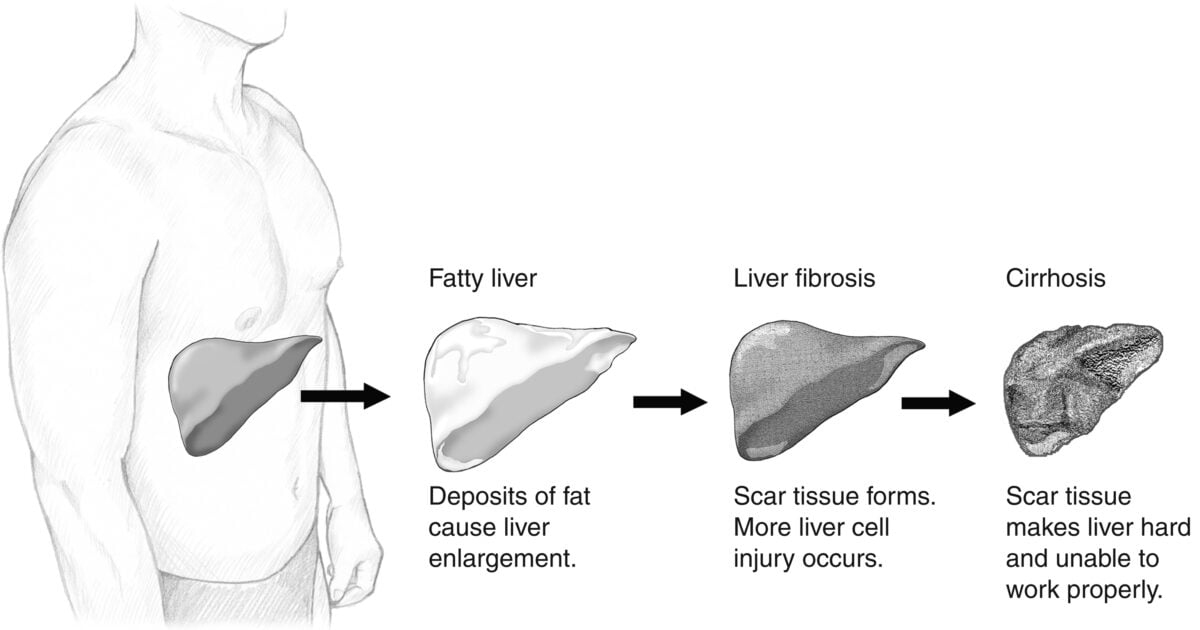
Stages of fatty liver disease (now known as metabolic dysfunction–associated steatotic liver disease) progress from healthy liver tissue to steatosis (fat accumulation), inflammation, fibrosis, and cirrhosis. (National Institute of Diabetes and Digestive and Kidney Diseases/NIH) You’re more at risk for fatty liver disease if you’re carrying extra weight, especially around the middle.
Other risk factors include high blood fat levels (LDL cholesterol or triglycerides), type 2 diabetes or prediabetes, and high blood pressure.
All of these risk factors involve food and metabolism, but a new study in mice shows there may be an important aspect of people’s diets that has been overlooked: exposure to microplastics, specifically polyethylene.
It’s one of the most important plastics for food convenience: it packages takeaways, cling-wraps leftovers, stops your single-use cup from dissolving in your hand.
And, compared to many other polymers, polyethylene has kind of been considered a lesser concern.
“No studies have really looked into polyethylene’s effect on liver health, and it’s the most widely produced plastic,” explains molecular pharmacologist Adi Joshi of Texas A&M University.
“What we now know is that these microplastics, especially polyethylene, affect our liver’s natural defense and repair mechanisms.”
Joshi and his colleagues’ research, published in Science Advances, is based on mouse experiments, so it’s important that further research is conducted to know for sure if polyethylene has the same or similar effects on the human liver.
It was also a pretty small sample of mice, but the effects they saw were concerning nonetheless.
Twenty male mice were separated into four groups.
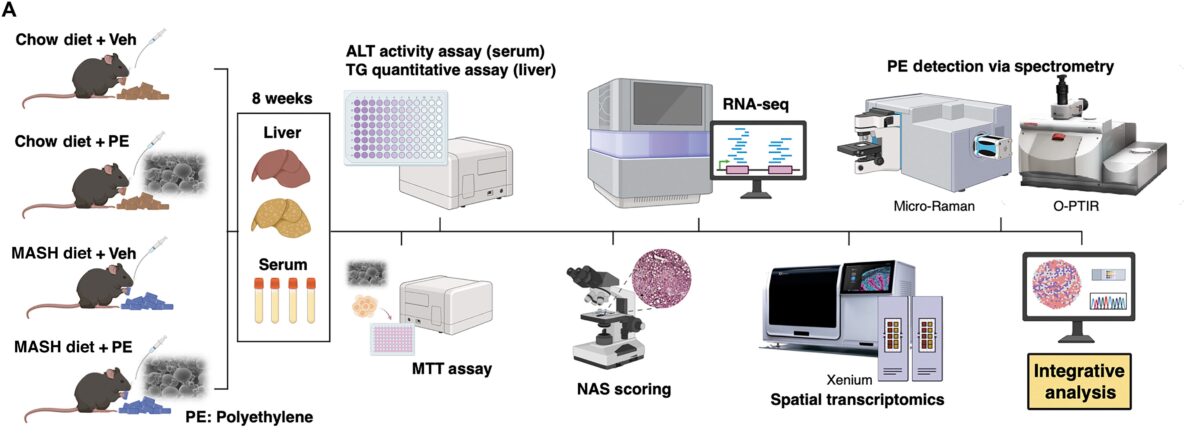
A schematic overview of the experimental design showing the different treatment groups and analysis techniques. (Jung et al., Science Advances, 2026) Groups 1 and 2 were fed standard lab mouse chow, while groups 3 and 4 were fed a high-fat, high-sugar, and high-cholesterol diet known to cause metabolic dysfunction-associated steatohepatitis (or MASH) – the medical term for this kind of fatty liver disease.
The scientists also gave the mice in groups 2 and 4 a dose of water containing two milligrams of polyethylene particles, between 10 and 150 nanometers in diameter, each day.
These treatments continued for eight weeks. Then, the mice were euthanized, and their blood serum and livers were collected for closer inspection.
The results suggest that microscopic polyethylene can trigger signs of fatty liver disease, even with a standard diet.
As expected, the two groups of mice fed the MASH diet had far higher scores for signs of fatty liver disease than the standard chow groups.
But regardless of diet, the addition of microplastics appeared to exacerbate the condition – even among the mice who ate a relatively healthy diet.
Levels of ALT, an enzyme indicative of poor liver health, and liver triglycerides were higher in both groups whose diets were laced with microplastics than in animals fed the same corresponding diet without polyethylene.
The same went for liver cell inflammation and ballooning, and steatosis (fat buildup in the liver).
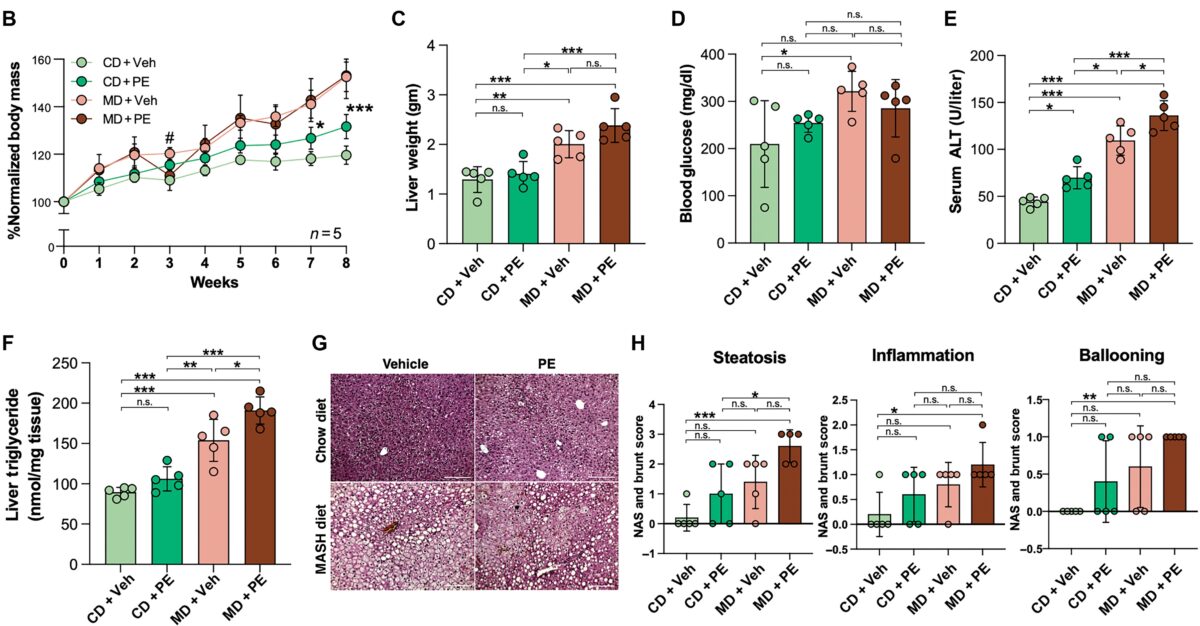
Molecular and histopathological effects of polyethylene microplastics in mouse liver with or without a high-fat diet. (CD = control diet, Veh = vehicle [water with no microplastics], MD = MASH diet, PE = polyethylene). (Jung et al., Science Advances, 2026) Using spatial transcriptomics on the mouse liver samples, Joshi and colleagues investigated levels of genetic readouts for proteins produced in response to the presence of microplastics.
Genes encoding proteins PPAR-alpha(which regulates liver fat production) and Annexin A2 (which, in the liver, is involved with tissue repair) were both in overdrive in the microplastics-affected livers.
Studies with larger sample sizes are definitely needed, but with what we’ve got so far, it appears polyethylene microplastics and poor diet could both be contributing to the development of fatty liver disease – especially when paired, as they so often are.
“Those who have a more Western-style diet, including foods like burgers and sodas, may have a greater chance of progressing to fatty liver disease if they are also exposed to polyethylene,” Joshi says.
The research was published in Science Advances.
Source: Science Alerts
Continue reading →